Review of user behavior through navigation recordings
Comparative analysis with the existing iOS app
Low-fidelity wireframing and validation
UI design aligned with Material Design and the company’s style guide
Year
2021
About this projects
Bringing a mature CRM experience to Android users
The company already had a well-established CRM ecosystem, including a mature web platform and an iOS mobile app. However, the Android version was still limited in functionality and usability.
The goal of this project was to identify usability issues, align the Android app with the existing design foundations, and redesign the UI to deliver a more complete and intuitive CRM experience for Android users.
Understanding the problem
To understand the product context, I started by studying the full web-based CRM system, including features that would not be immediately available on mobile. This helped ensure the mobile experience reflected real user workflows rather than isolated screens.
User navigation recordings were analyzed to understand how people interacted with key features in their daily work. In parallel, the existing iOS app was reviewed to identify patterns, opportunities for improvement, and consistency gaps.
Based on these insights, low-fidelity wireframes were created to explore layout and hierarchy before moving into final UI design.
Main activities:
• Analysis of the web CRM structure and features
• Review of user behavior and interaction patterns
• Comparative analysis between iOS and Android experiences
• Wireframing and validation of core flows
• Final UI design for Android
UI Design
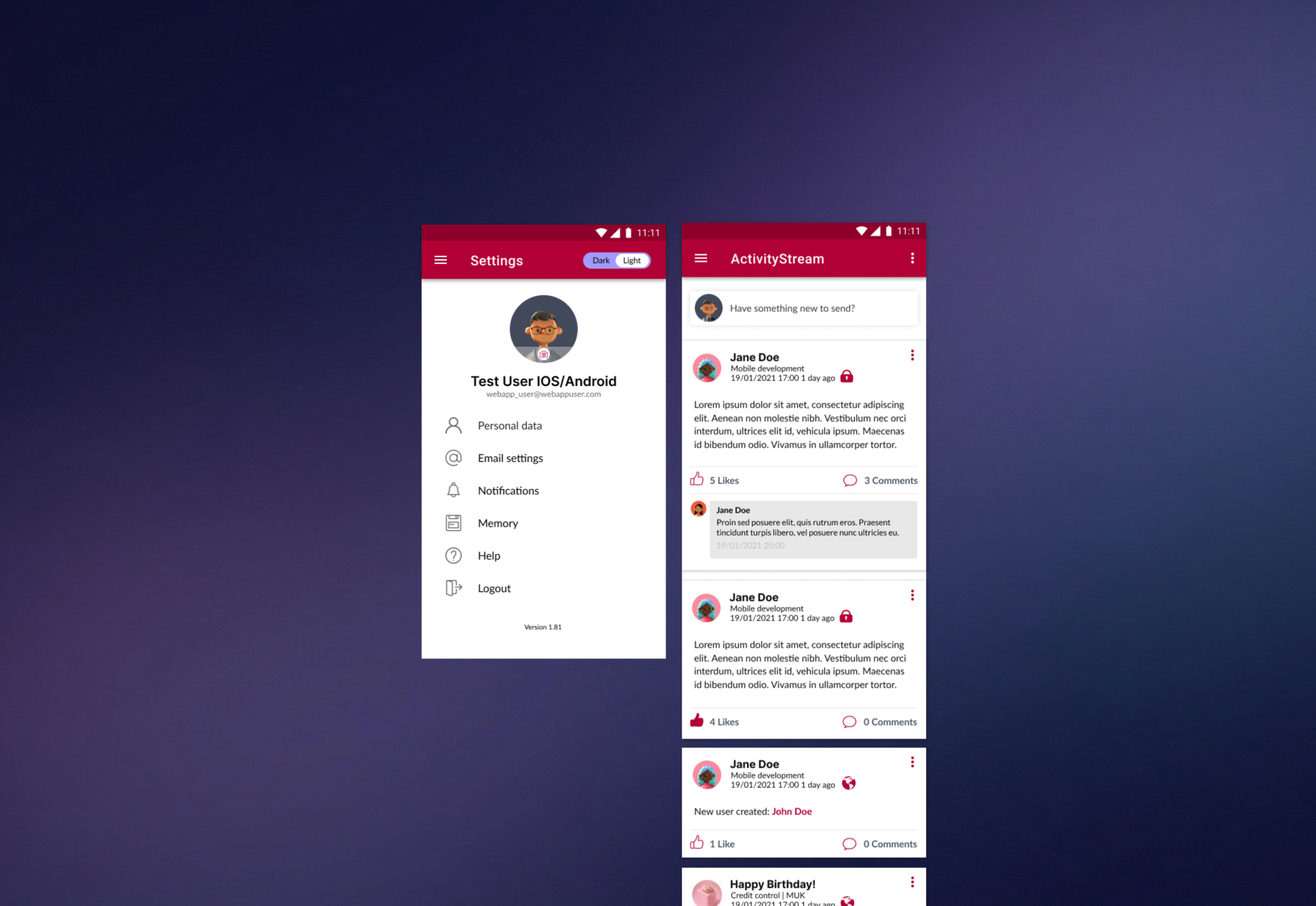
The Android app was designed following Material Design guidelines while remaining consistent with the company’s visual language.
Key choices included:
• Light and dark mode support
• Use of icons to reinforce actions and improve scannability
• Brand colors applied as accent colors
• Familiar interaction patterns to reduce learning curve
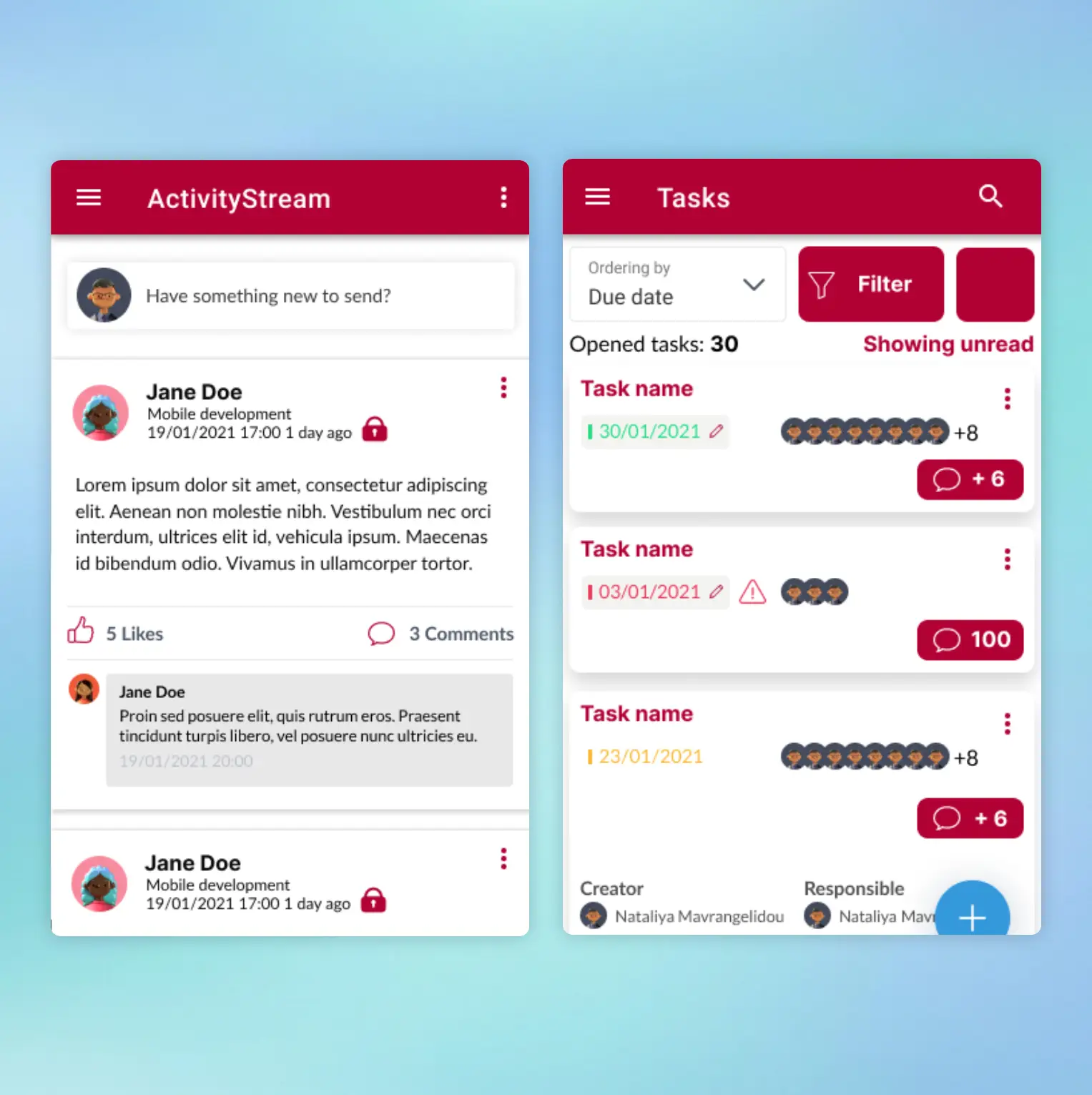
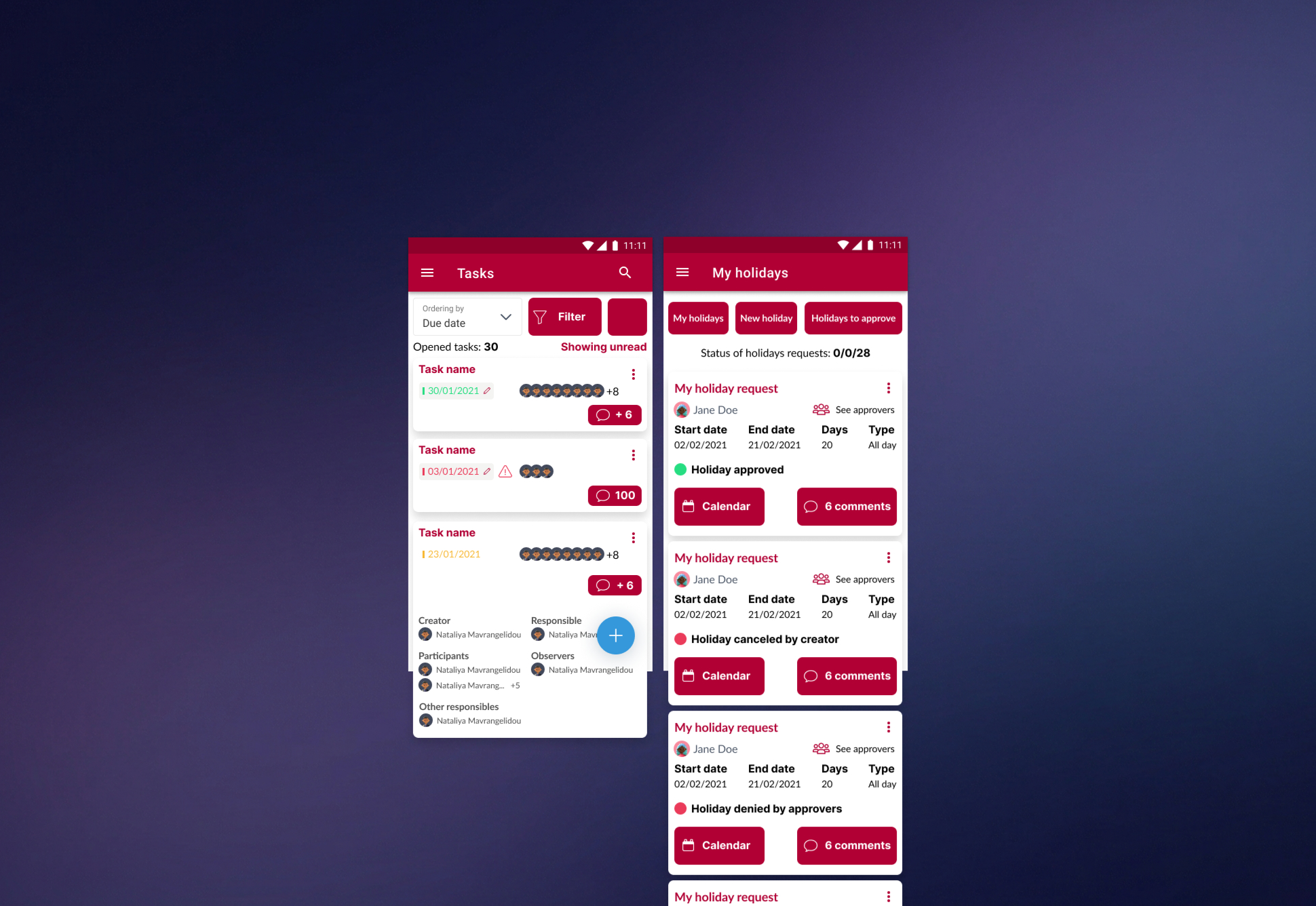
The Activity Stream was intentionally designed to resemble a news feed, making it immediately recognizable and easy to navigate. Tasks were displayed as cards, with filtering and sorting options to support daily workflows.
Core features
• Activity stream for updates and communication
• Task management with card-based layout
• Holiday request and approval flows
Outcomes & impact
Improved usability and consistency across platforms
Reduced friction in core CRM workflows
Stronger alignment with existing design foundations
Key learnings
This project marked my first deep exposure to CRM systems. Understanding how users rely on these tools daily highlighted the importance of clarity, consistency, and efficiency in enterprise products.
Working across web, iOS, and Android also reinforced the value of shared design foundations and thoughtful adaptation to platform-specific patterns.