User research through heatmaps and session recordings
Wireframing and validation with stakeholders
UI design aligned with the company’s product vision
Ongoing design reviews during development sprints
Year
2021
About this projects
Leading the redesign of a complex CRM platform
This project took place during a full migration and codebase restructuring of the company’s CRM platform. Alongside the technical transformation, there was a clear opportunity to rethink the product experience, address long-standing usability issues, and introduce improvements aligned with how users actually worked.
My role was to lead the product redesign, identify usability opportunities, and propose enhancements while ensuring continuity with existing workflows during the migration.
Understanding the problem
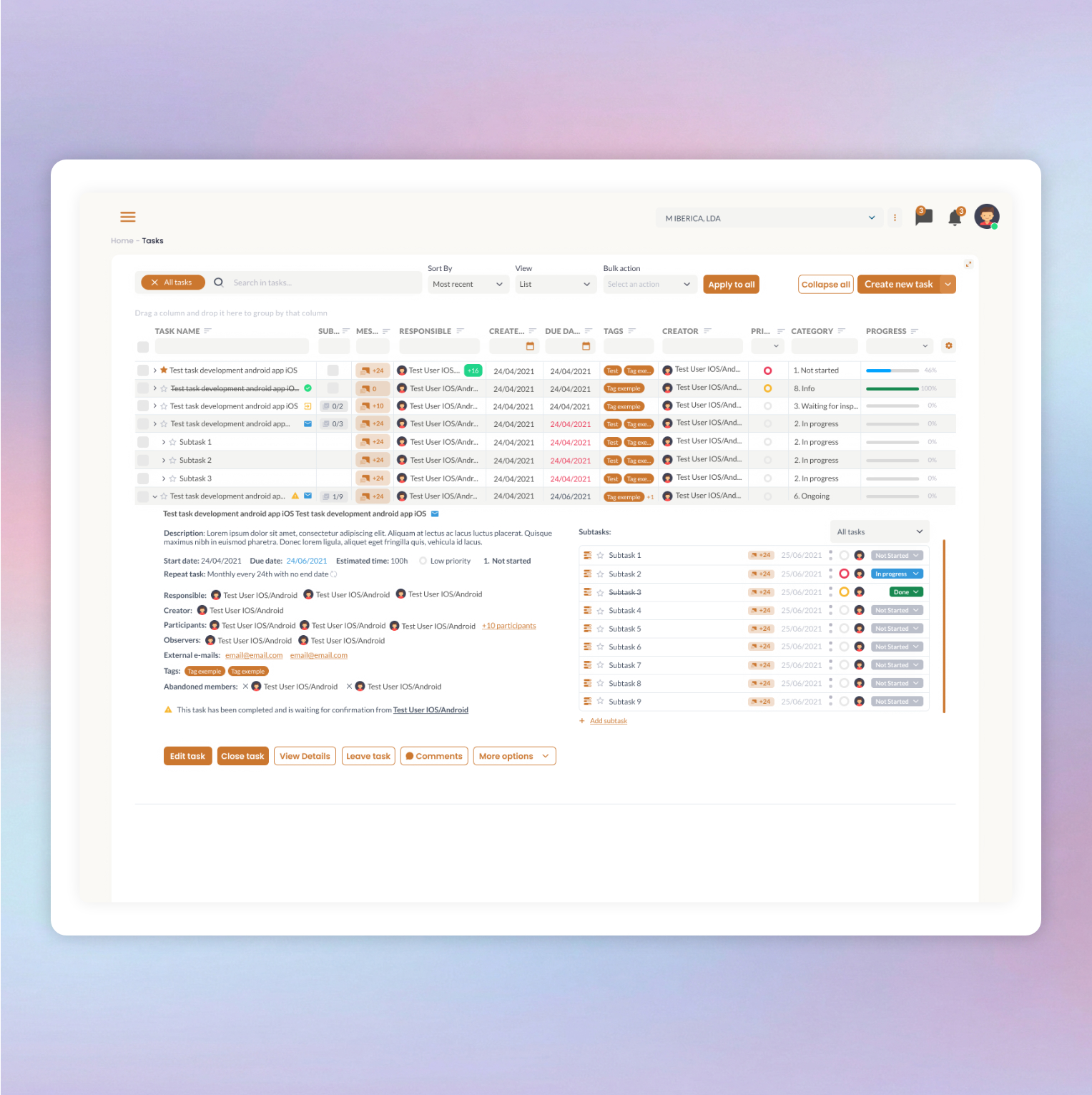
Given the complexity of the CRM, the first step was to break the product down into its most critical and robust features. The focus areas included Activity Stream, Tasks, and Forms and Tables, the latter treated as a separate initiative due to its scope.
Having previously worked on the mobile CRM, I already had strong product knowledge and a clear understanding of user profiles. This foundation allowed me to go deeper into behavioral research using heatmaps and user navigation recordings to validate assumptions and uncover new insights.
These findings informed the wireframes, which were reviewed and approved by stakeholders before moving into final UI design.
Main activities:
• Feature mapping and prioritization
• Analysis of heatmaps and user navigation videos
• Identification of usability bottlenecks and underused areas
• Low-fidelity wireframes for structure validation
• Iterative UI design aligned with technical constraints
UI Design
Insights from heatmaps revealed which areas users interacted with most and which elements added little value. This allowed the redesign to surface high-value features more prominently while simplifying or deprioritizing secondary ones.
The final UI followed the company’s broader product vision, focusing on clarity, consistency, and modern interaction patterns.
Key design choices:
• Clean, minimal interface
• Brand color used as an accent rather than dominant
• Improved hierarchy and navigation clarity
• Introduction of new features aligned with user workflows
• Consistency across screens to support daily use
To ensure design quality during implementation, design reviews were conducted at every sprint, helping identify usability issues and misalignments early.
Outcomes & impact
Improved usability across key CRM features
Better alignment between user behavior and interface structure
A more scalable and maintainable product foundation
Key learnings
This project reinforced the complexity of designing enterprise products with diverse user roles and workflows. Deep collaboration with engineering was essential to balance ideal experiences with technical realities during migration.
Leading a long-running redesign also highlighted the importance of prioritization, clarity, and continuous validation when evolving complex systems. Despite the challenges, the end result delivered a significantly improved experience that users responded positively to.